
About
I am Yuxiang Lin (林育祥), a PhD student at the National Institute for Data Science in Health and Medicine, Xiamen University, majoring in computational biology and bioinformatics. I am supervised by Rongshan Yu.
I received my B.S. in Biology from the State Key Laboratory of Cellular Stress Biology, School of Life Sciences, Xiamen University (2018-2022).
My research is organized around three connected interests:
- Computational biology: developing computational methods for clinically relevant tumor microenvironment niche discovery, single-cell recurrence risk modeling, spatial transcriptomics prediction, and perturbation-response benchmarking, represented by TiRank, scRank, ST-Align, HyperST, and Chem2Gen-Bench.
- Biomedical agents: exploring agentic AI systems for biomedical research, including literature-aware reasoning, multimodal evidence integration, tool-augmented data analysis, and workflow automation for diagnosis, prognosis, and mechanism discovery.
- Multi-omics for medicine: integrating single-cell, spatial, transcriptomic, proteomic, and imaging data to support disease mechanism discovery and translational biomarker analysis.
Selected Publications
View All →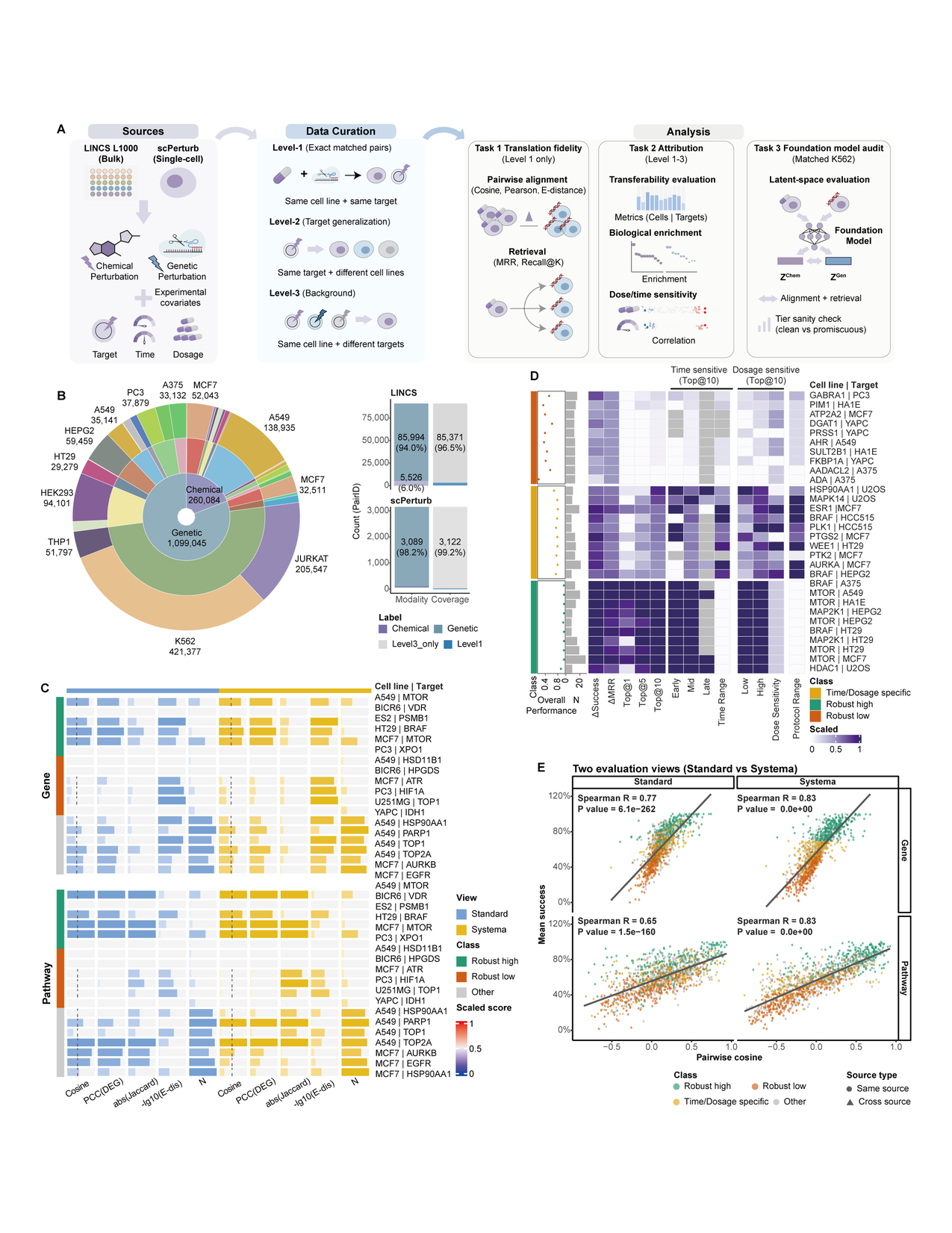
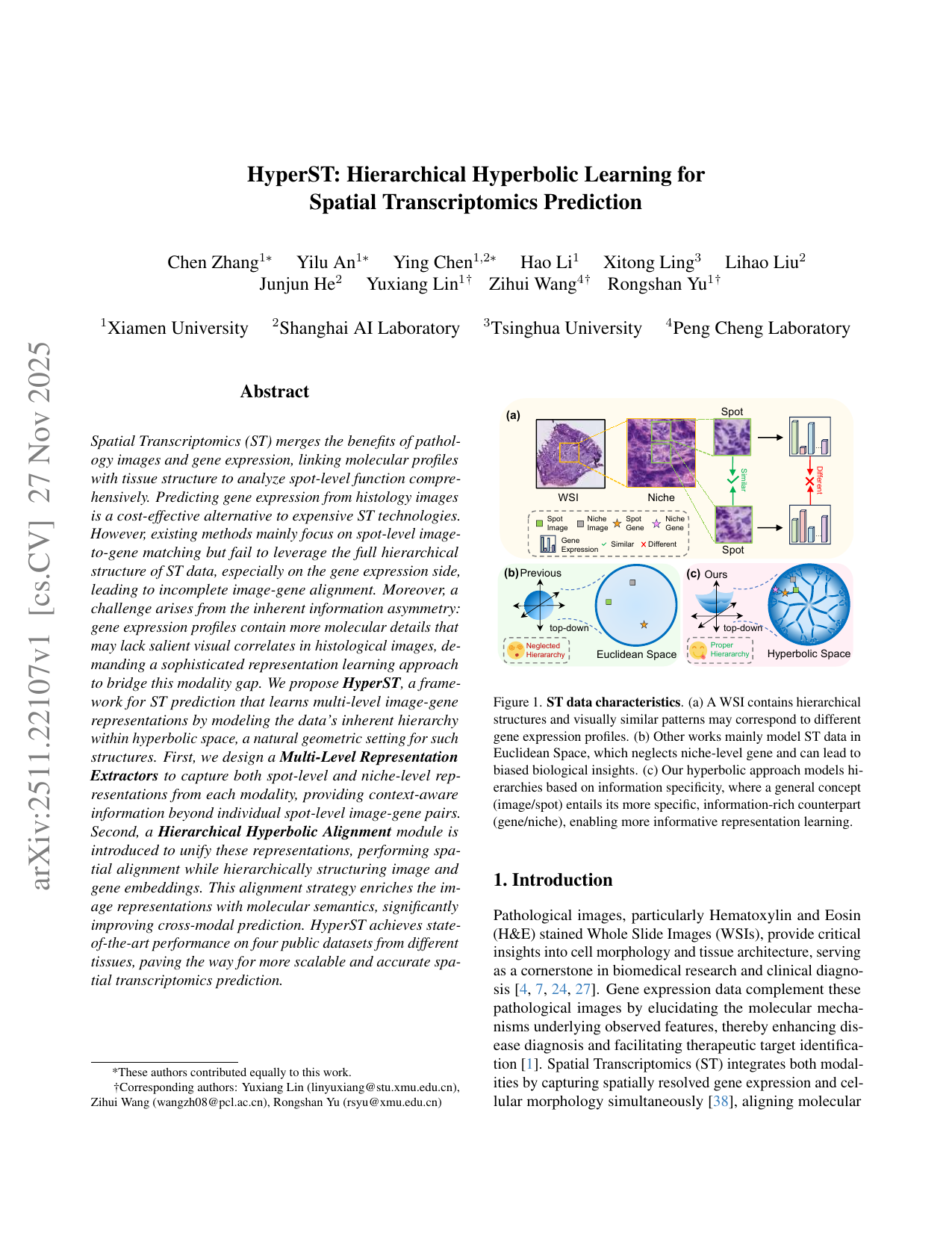
HyperST: Hierarchical Hyperbolic Learning for Spatial Transcriptomics Prediction
Chen Zhang, Yilu An, Ying Chen, Hao Li, Xitong Ling, Lihao Liu, Junjun He, Yuxiang Lin, Zihui Wang, Rongshan Yu
IEEE/CVF Conference on Computer Vision and Pattern Recognition (CVPR), Spotlight
A CVPR 2026 Spotlight paper on hierarchical hyperbolic learning for spatial transcriptomics prediction.
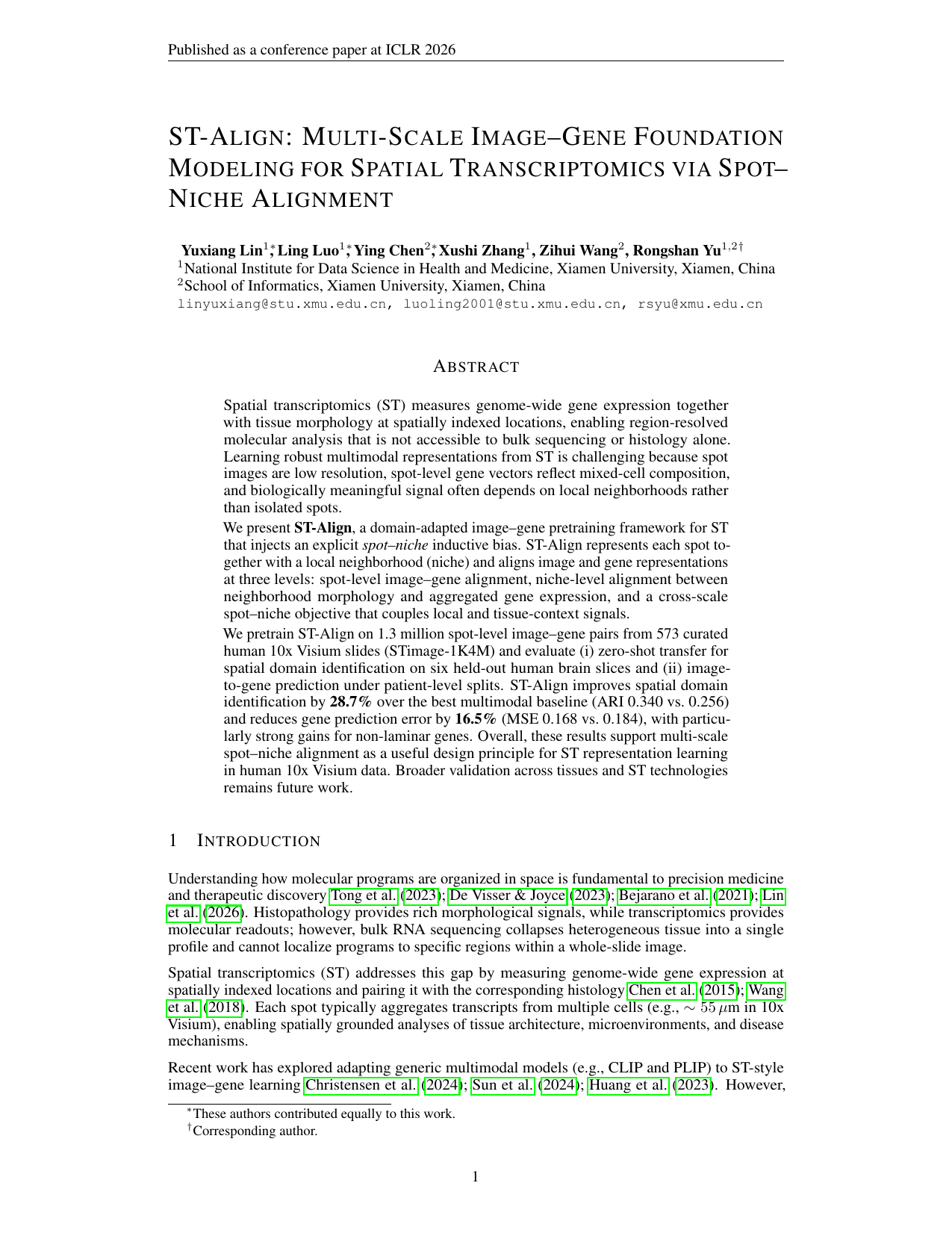
ST-Align: Multi-Scale Image-Gene Foundation Modeling for Spatial Transcriptomics via Spot-Niche Alignment
Yuxiang Lin, Ling Luo, Ying Chen, Xushi Zhang, Zihui Wang, Rongshan Yu
ICLR 2026 Workshop on Foundation Models for Science
A multi-scale image-gene foundation modeling method for spatial transcriptomics via spot-niche alignment.
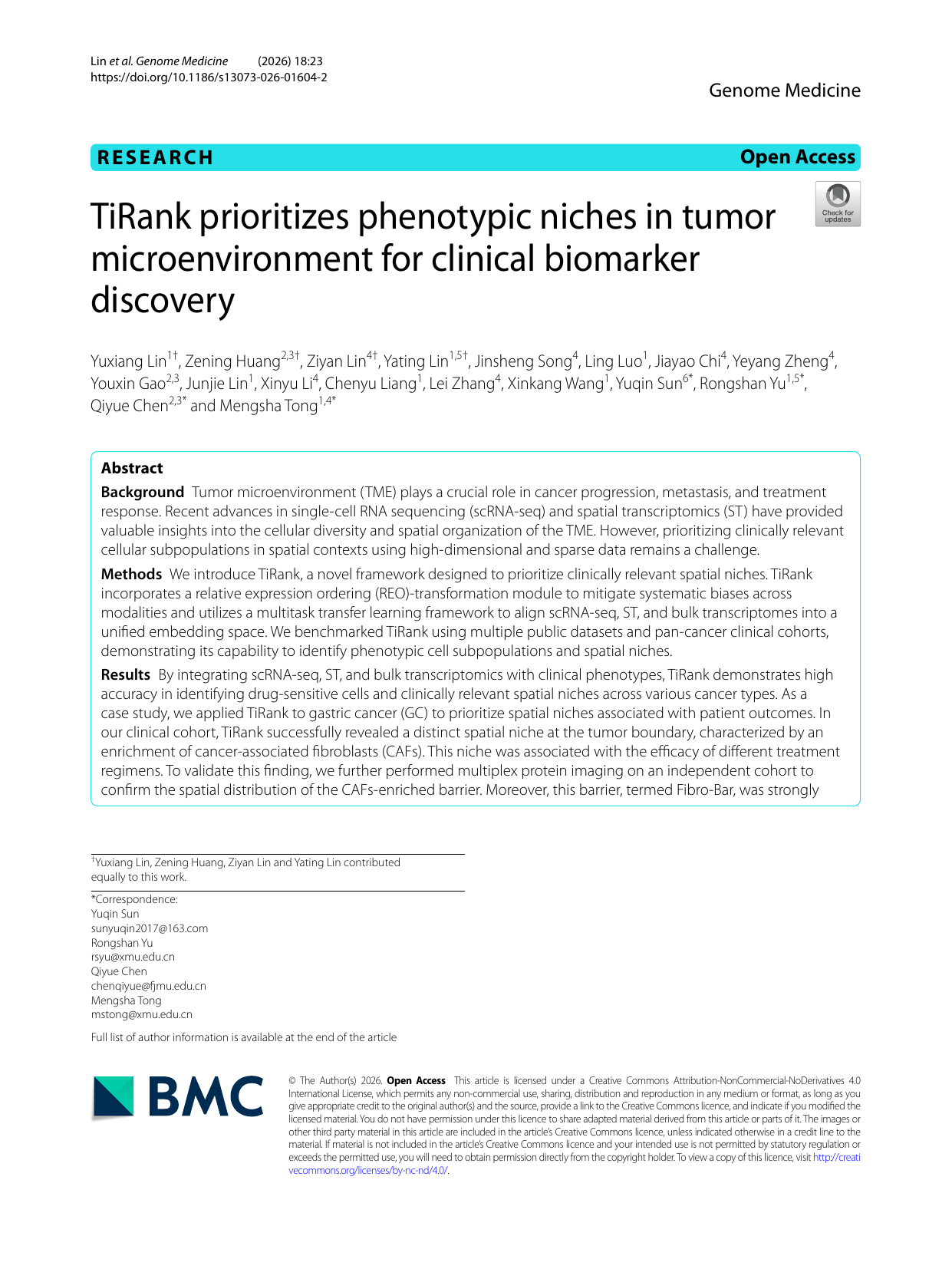
TiRank prioritizes phenotypic niches in tumor microenvironment for clinical biomarker discovery
Yuxiang Lin, Zening Huang, Ziyan Lin, Yating Lin, Jinsheng Song, Ling Luo, Jiayao Chi, Yeyang Zheng, Youxin Gao, Junjie Lin, Xinyu Li, Chenyu Liang, Lei Zhang, Xinkang Wang, Yuqin Sun, Rongshan Yu, Qiyue Chen, Mengsha Tong
Genome Medicine
A computational framework for prioritizing clinically relevant phenotypic niches in the tumor microenvironment.
News
SlideChat was published in Nature Cancer as a multimodal generative AI assistant for whole-slide computational pathology across cancer types.
Chem2Gen-Bench was released as an arXiv preprint for benchmarking chemical-to-genetic translation in perturbation response space.
HyperST was accepted as a CVPR 2026 Spotlight paper.
ST-Align appeared at the ICLR 2026 Workshop on Foundation Models for Science.
TiRank was published in Genome Medicine.
SurvMamba appeared at IEEE BIBM 2025.
BioMTAN was published in IEEE Journal of Biomedical and Health Informatics.
Work on Ccl2-induced regulatory T cells was published in Advanced Science.
A preprint on accurate cell abundance quantification with multi-positive and unlabeled self-learning was released.
Our biological-pathway-based transformer model for tracing unknown tumor origins was published in Cell Reports Methods.
PhosMap was published in Computers in Biology and Medicine.